Based on the provided event planning and guest biography documents, here is the revised article following the house style of the Harvard Business Review.
The Globalization Paradox: Integrating Intelligence and Talent in the AI Era
In the previous decade, global expansion followed a predictable playbook: export a proven product, optimize the supply chain, and localize marketing. Today, that playbook is obsolete. As artificial intelligence decentralizes production and commoditizes technical advantages, the competitive moat has shifted from what a company builds to how it integrates global talent and localized innovation ecosystems.
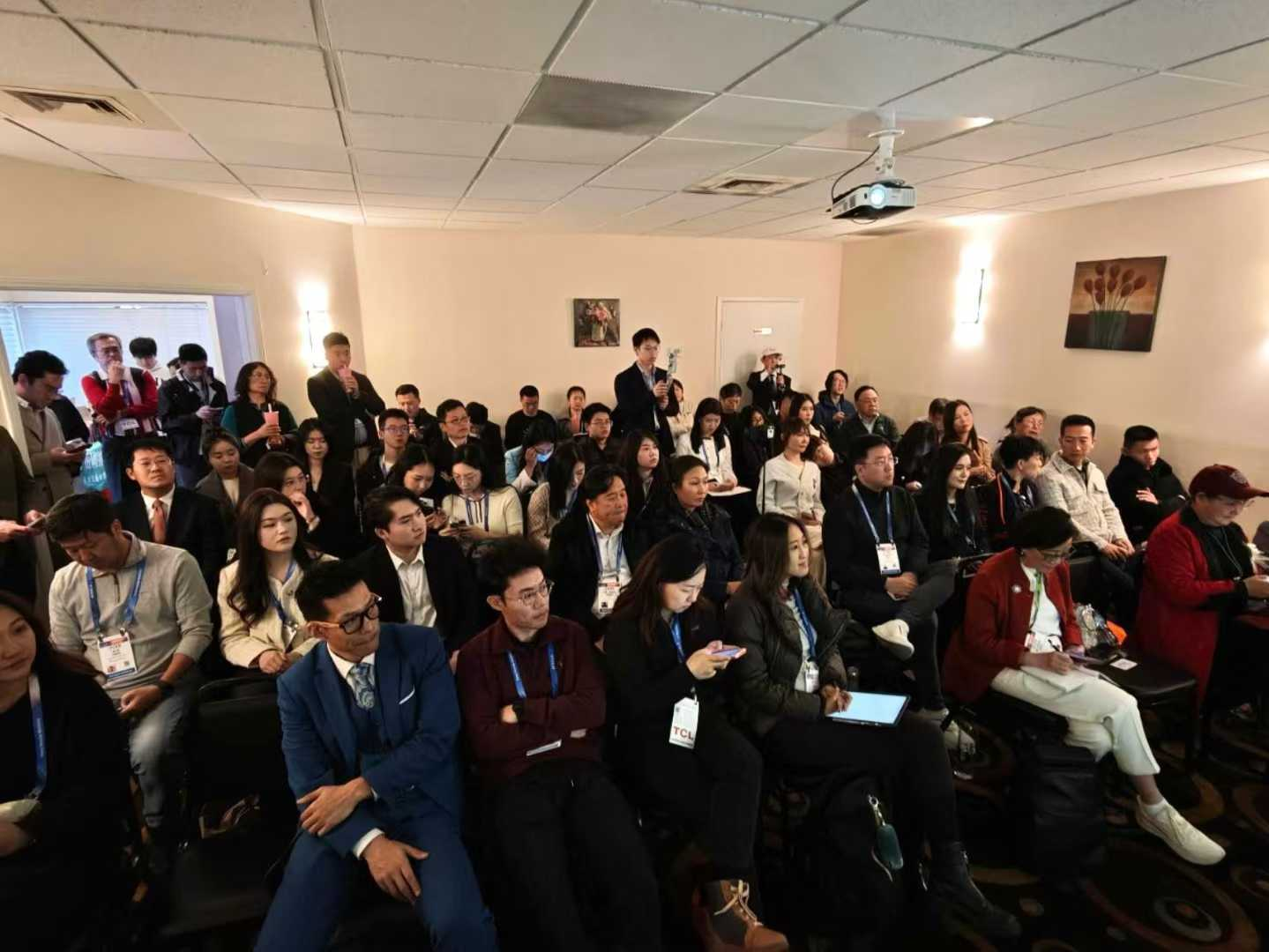
The inaugural CES 2026 Chinese Enterprise Globalization and Global University Talent Forum, organized by the Penn Global Artificial Intelligence Alliance (PGAIA), recently highlighted this tectonic shift. For senior leaders, the takeaway was clear: the next phase of globalization is not about geographical reach, but about cognitive integration. We are moving from a world of "products for sale" to a world of "trusted ecosystems".
Declaring the New Moat: Cognitive Architecture and Infrastructure
The forum’s sessions on foundational technology revealed that the AI "arms race" is moving beyond raw processing power toward sophisticated data architecture and infrastructure that supports long-term consistency.
-
The Architecture of Memory: EverMind, represented by COO Sophia Han, introduced the concept of Ever MemOS, a Memory OS designed for Agentic AI. By empowering AI to reason with near-infinite context and maintain long-term consistency, they seek to transform AI from a "static genius" into a continuous partner. For executives, this signifies a shift in AI strategy: the goal is no longer just "smarter" models, but models that retain institutional knowledge at lower latency and cost.
-
The Strategic Value of Digital Assets: Jack Dai, founder of LOUPAN.COM, highlighted the evolution of digital real estate. As an early investor in DN.com, Dai demonstrated how premium domain assets—particularly in the .AI space—serve as the "digital soil" for the next generation of global transaction platforms.
-
Infrastructure for the AI Footprint: Bill Wang, CEO of Amergy Solar, addressed the physical bottleneck of the AI revolution: power. As a leading solar developer, Wang noted that scaling global AI initiatives requires large-scale utility systems to meet the massive energy demands of data centers.
The Trust Economy: Reimagining Global Market Entry
A recurring theme among participants, including Chao Gao, Managing Director of iMpact, was the critical nature of brand narrative and corporate reputation in new territories. In a globalized AI economy, the primary barrier to entry is no longer cost—it is social and institutional trust.
Chinese firms often possess superior engineering but face complex regulatory and cultural environments. Senior leaders must move from "selling" to "socializing." True globalization is "hyper-localization," where a company’s identity is built through strategic communications and stakeholder engagement rather than simple advertising.
The New Workforce: From Roles to Tasks
The forum’s roundtable on talent, hosted by Chao Gao, offered a sobering view of the organizational chart of 2030. The consensus: AI will not replace people, but "AI-literate" professionals will undoubtedly replace those who remain static.
Three Strategies for the AI-Native Organization
To navigate this transition, leaders should adopt the following framework:
-
Prioritize Bridge Talent: Seek "bridge talent" like Tracy Zhang, who combines corporate experience (Huawei) with academic research into AI policy and governance. These individuals understand both the technical "how" and the regulatory "why".
-
Integrate Security with Strategy: As John Li (Stanford University) noted, cybersecurity and risk control are no longer IT functions—they are core pillars of security governance for any multinational organization.
-
Validate Cultural Fluency: Global expansion requires leaders who can bridge cultures between East and West. Dr. Bruce Zou (Heli Glocal Consulting) emphasizes that the age of AI requires workforce development strategies that help international firms adapt to local economic trends.
Pitch Session: The Rise of Specialized Intelligence
The startup showcase, judged by investors like Larry Li (Amino Capital) and Ray Zong (Global Wealth Management LLC), highlighted a shift toward highly specialized, vertical applications.
| Project / Leader | Strategic Focus | The "So What?" |
|---|---|---|
| Dr. Jason Dou (Marbella AI) | AI Literacy & Training |
| Developing future-ready talent pipelines is the only way to ensure long-term AI adoption.
| | Andrew Zhang (Azure Partners) | Go-to-Market Scaling
| AI startups need more than models; they need RAG and Agent-driven scaling strategies.
| | Jack Chen (Geward Inc.) | Data-Driven Hospitality
| AI-driven flash sales allow traditional industries (restaurants) to optimize revenue in real-time.
| | YoYo Xiao (Artist) | Human-Machine Symbiosis
| AI is not just a tool, but a "creative subject" that transforms visual language and branding.
|
The Manager’s Takeaway
The era of "selling from the center" is over. Whether you are leading an investment firm like Irene Shen's CLI or a technology alliance like Selena Wu's PGAIA, your success depends on your ability to build a decentralized, AI-augmented, and highly localized presence.
The future belongs to the "lean globalist"—the leader who uses AI to strip away operational overhead while investing heavily in the human relationships and cultural understanding that technology cannot replicate. We must stop asking what AI can do for our current business model and start asking what business models become possible when intelligence is ubiquitous and "trust" is the only scarce resource.